
 Every place worth seeing on Bali PL
 Loading the map…
Campuhan
The meeting of two rivers where Ubud was born
Campuhan Ridge, Ubud
West of Ubud the Wos Tengen and Wos Kiwi rivers merge. Balinese believe that wherever two waters become one, positive spiritual energy gathers. In this secluded spot Hindu monks founded a healing retreat in the 9th century and named it Ubud, from 'ubad', medicine.
Today the Campuhan ridge is the nicest walk in the area: a paved path runs along the crest between two valleys, through tall alang-alang grass, with views of Pura Gunung Lebah temple at the confluence.
On the route
See the tour on balijczyk.pl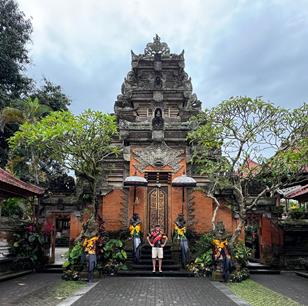
Puri Saren – pałac królewski
Ubud's 17th-century royal residence
Puri Saren Agung, Ubud
In the very centre of Ubud stands the model royal residence from the 17th century. The palace remembers pre-colonial glory days and still serves representative functions; descendants of the old rulers live here.
It was thanks to the princes of this court that, less than a hundred years ago, Bali had its cultural revolution: invited European artists such as Walter Spies opened the island to the world and made it known as a true Eden.
On the route
See the tour on balijczyk.pl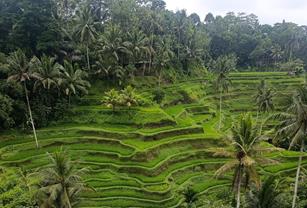
Tarasy ryżowe Tegallalang
Bali's most famous landscape: sculpted green terraces and swings over the valley
Tegallalang Rice Terrace
Tegallalang is famous for its steep, 'sculpted' rice terraces shimmering in unusual shades of green. They rest on an ancient irrigation system and the Balinese farming cooperative subak, which has shared water fairly between plots for a thousand years.
The willing (and brave) can chase some adrenaline on the giant swings or glide high above the terraces on a zipline, surrounded by extraordinary greenery.
On the route
See the tour on balijczyk.pl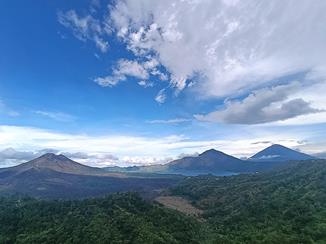
Kintamani – kaldera Batur
An active volcano and its lake seen from the rim of a prehistoric caldera
Penelokan, Geopark Batur
The highland of Kintamani sits at 1,400 m and rings a huge valley with the active Batur volcano at its centre. The caldera formed 30,000 years ago and is a UNESCO Global Geopark today. Black lava fields on the slopes testify to its activity; the last major eruption was in 2000.
From the restaurant terraces on the rim (Penelokan means 'place to look') you get the full panorama of Mount Batur, Lake Batur and Mount Abang rising behind. This is the usual lunch-with-a-view stop.
On the route
See the tour on balijczyk.pl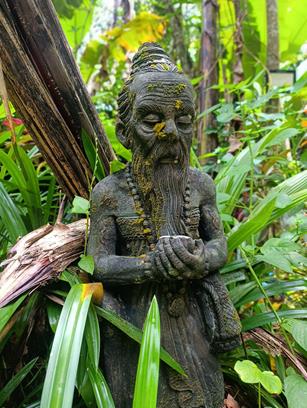
Plantacja tropikalna i kawa luwak
A botany lesson: cloves, cocoa, vanilla and the world's priciest coffee
Agro-tourism, Tegallalang–Tampaksiring
A tropical garden hosts a short botany lesson on spices and fruit: cloves, cinnamon, cocoa, coffee, pineapple, jackfruit, mangosteen, snake fruit and vanilla all grow within reach.
The hosts invite you to taste a dozen teas and coffees, including the famous kopi luwak, recovered from the droppings of the Asian palm civet. It is one of the world's most expensive coffees; a cup costs as much as lunch.
On the route
See the tour on balijczyk.plThe pin location is approximate.
Pura Tirta Empul
A 10th-century holy spring where Balinese perform ritual purification
Tampaksiring
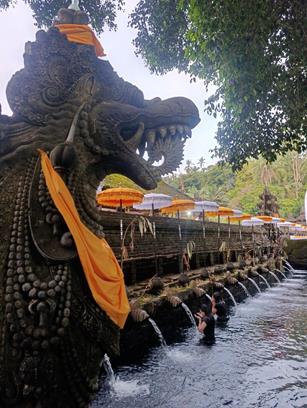
In the village of Tampaksiring lies Pura Tirta Empul, a UNESCO-listed temple founded in the 10th century at a bubbling sacred spring. Water is the most important element of Balinese Hinduism, which calls itself 'agama tirta', the religion of water.
Islanders travel from its farthest corners to bathe under the thirteen spouts and collect water for home ceremonies. Visitors may join, respectfully and properly dressed.
On the route
See the tour on balijczyk.pl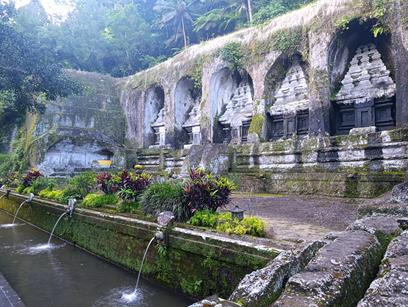
Gunung Kawi
Bali's oldest monument: 11th-century royal tombs carved into the cliff
Candi Tebing Gunung Kawi
Candi Tebing Gunung Kawi is Bali's oldest archaeological monument, dating from the 11th century and under UNESCO patronage. A path of almost 300 steps leads to the tomb complex in the gorge of the holy Pakerisan river, surrounded by rice fields.
Facing cliffs hide candi shrines carved into solid rock, dedicated to one of the ancient rulers of Bali, his four wives and four concubines. The silence, the river and the late light make a deep impression.
On the route
See the tour on balijczyk.pl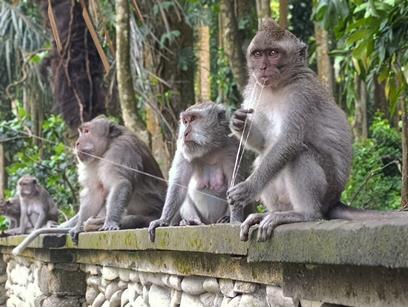
Święty gaj małp w Sangeh
An intimate reserve of macaques and 40-metre nutmeg trees
Mandala Suci Wenara Wana, Bukit Sari
The sacred monkey grove of Bukit Sari is home to long-tailed macaques and giant pala (nutmeg) trees up to 40 metres tall. Four temples lie within the reserve; the oldest, Pura Puncak Sari, dates from the 17th century.
At the entrance stands an imposing statue of Kumbakarna, brother of the demon king Ravana from the Ramayana epic. Monkeys hold a special place in Hindu belief, appearing in literature, dance and sculpture, so the Balinese treat them with due respect.
On the route
See the tour on balijczyk.pl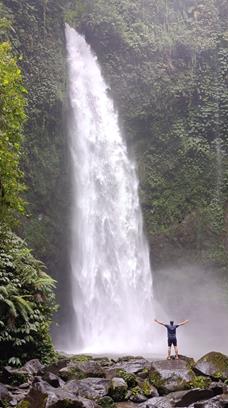
Wodospad Nungnung
Bali's mightiest cascade: 50 metres of water and 500 jungle steps
Air Terjun Nungnung
Heading north the scenery changes from flat rice fields to highland, mountain and rainforest. On the way to this off-the-beaten-track waterfall you pass cocoa, banana, coffee, clove, cinnamon, durian and jackfruit trees.
After several hundred steps through the jungle every sign of fatigue vanishes when you hear the roar. A powerful cascade drops tens of metres into a rock-ringed pool where the willing can swim. Nungnung carries the largest volume of water of all Balinese waterfalls.
On the route
See the tour on balijczyk.pl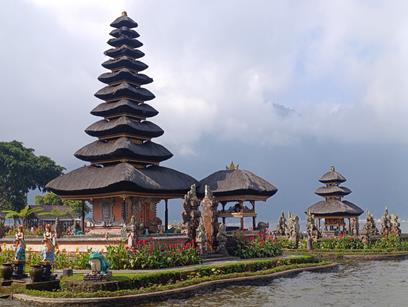
Pura Ulun Danu Bratan
The 'mother' temple on the lake, the icon on the 50,000-rupiah note
Bedugul, jezioro Bratan
Back roads through the mountains lead to the land of the great lakes, part of the geological Catur caldera. The resort town of Bedugul sits on Lake Bratan, which fills the crater of an extinct volcano.
On the shore stands Pura Ulun Danu Bratan, the 'mother' temple for all Balinese temples devoted to agriculture and the water goddess Dewi Danu. Its tiered meru towers reflected in the lake are one of the island's most recognisable images.
On the route
See the tour on balijczyk.pl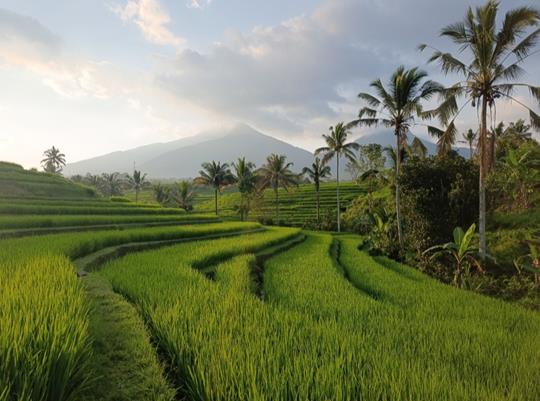
Pola ryżowe Jatiluwih
Bali's biggest rice bowl: kilometres of UNESCO-listed terraces
Jatiluwih, regencja Tabanan
Little-used, often bumpy lanes lead inland past traditional compounds, villages and shrines to Bali's largest rice landscape, Jatiluwih in Tabanan regency, where cool mountain air meets a warm sea breeze.
Vast, intensely coloured sweeps of terraces run for kilometres from the slopes towards the coast. As a living expression of Tri Hita Karana, the harmony of people, nature and the gods, the area was inscribed on the UNESCO World Heritage list in 2012. Several scenic walking loops are available.
On the route
See the tour on balijczyk.pl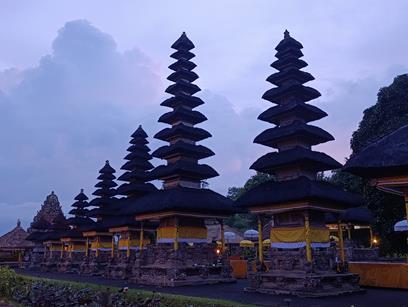
Pura Taman Ayun
The 'beautiful garden' of the Mengwi kingdom, a row of meru mirrored in the moat
Mengwi
Taman Ayun literally means 'beautiful garden'. The 17th-century temple is ringed by two moats and, with its clear division into three courtyards, perfectly maps the Hindu universe.
The inner zone is famous for its fantastic row of multi-tiered meru towers, which served the old rulers of Mengwi as a 'remote representation' of Bali's most important sanctuaries. Towards evening this UNESCO site is practically empty.
On the route
See the tour on balijczyk.plPasar Seni Sukawati
A genuine art market where you will hardly meet a tourist
Sukawati Art Market
Founded in the 1980s, this is the local art market where the Balinese themselves shop. Carved wooden figures, frames, handicrafts, paintings, aromatherapy oils, sarongs and textiles, all cheaper than in Ubud.
An optional first stop on route #3 and the ideal place for souvenirs without the tourist mark-up.
On the route
See the tour on balijczyk.pl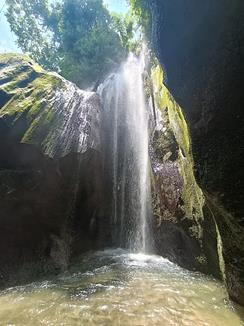
Wodospad Krisik
Wading up a wild canyon river to a hidden cascade
Air Terjun Krisik
An intimate waterfall hidden from the crowds and run by a welcoming village. Visitors get bamboo poles to wade the shallow river that flows through a naturally carved canyon.
Walking this wild stretch is an adventure in itself, and at its end waits a charming cascade with a pool where the willing can take a refreshing dip.
On the route
See the tour on balijczyk.pl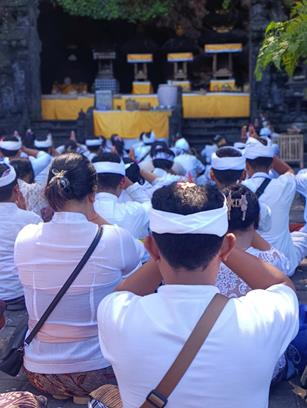
Pura Goa Lawah
An 11th-century sanctuary at a cave whose ceiling drips with thousands of bats
Jaskinia nietoperzy, Pesinggahan
Pura Goa Lawah was founded in the 11th century beside a mysterious cave taken over by countless bats hanging densely from its vault. This unassuming site belongs to the Sad Kahyangan, the six 'abodes of God' that form a symbolic protective shield around Bali.
The temple honours the mythical serpent Basuki; legend says the cave runs underground all the way to Besakih at the foot of Mount Agung. Ceremonies are frequent here, as it is one of the key sites for funeral rites.
On the route
See the tour on balijczyk.pl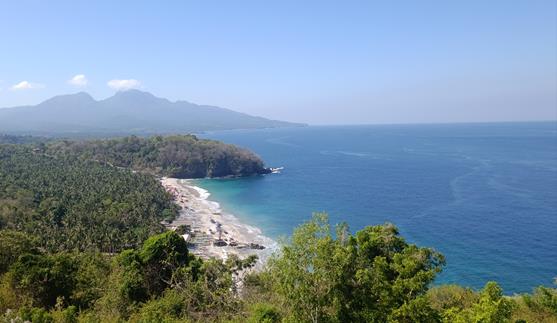
Bukit Asah – Virgin Beach
Hills above a paradise beach, looking at Nusa Penida and the boundary of continents
Bukit Asah, Bugbug
From the secluded hills of Bukit Asah you look down on gorgeous Virgin Beach (Pasir Putih), across to nearby Nusa Penida and, on a clear day, to the outline of Lombok, the next island in the archipelago.
This is a natural border between continents: the famous Wallace Line runs through the Lombok Strait, separating the fauna of South-East Asia from that of Oceania. Tigers and elephants on one side, kangaroos and cockatoos on the other.
On the route
See the tour on balijczyk.pl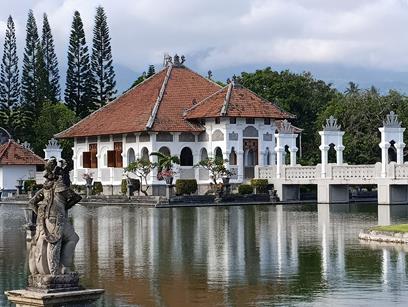
Pałac wodny Taman Ujung
The 'garden of eternal happiness': pools, bridges and the architecture of three cultures
Taman Ujung Sukasada
Taman Ujung Sukasada, property of the royal family of Karangasem, combines rich history, beautiful water features and delightful architecture with clear Balinese, Chinese and Dutch accents.
The extensive complex from 1919 consists of manicured gardens and floating pavilions linked by arched bridges. From the hill behind the palace you can see the ocean and Mount Agung at once.
On the route
See the tour on balijczyk.pl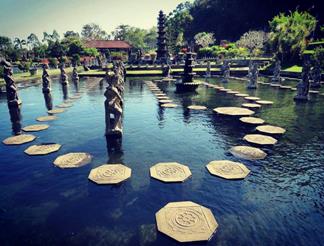
Pałac wodny Tirta Gangga
A maze of pools, fountains and stone sculptures in honour of holy water
Taman Tirta Gangga, Ababi
The Tirta Gangga palace complex is a fascinating labyrinth of pools, fountains with stone carvings and statues, surrounded by lush gardens. The name joins 'tirta', water in high Balinese, with 'gangga', a reference to the holy Ganges.
Built in 1946 by the last raja of Karangasem, it and its twin Taman Ujung pay tribute to water as the central element of Balinese Hinduism. The octagonal stepping stones in the koi pond are the most famous photo in all of East Bali.
On the route
See the tour on balijczyk.pl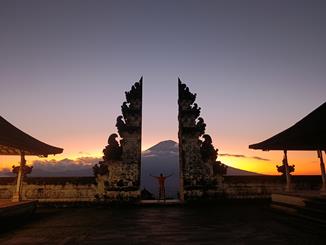
Pura Lempuyang – Wrota do Nieba
The split gate with Mount Agung framed inside, Indonesia's most famous shot
Pura Penataran Agung Lempuyang
After countless hairpins on the slopes of Gunung Seraya comes a short climb to Pura Penataran Agung Lempuyang, another piece of the puzzle of major sanctuaries forming Bali's symbolic compass rose. East is marked white on the Balinese compass, which is why the temple is built of pale limestone.
The big draw is the split gate, candi bentar, dubbed the 'Gates of Heaven', with its illusion of an abyss and a mirror-perfect reflection (in reality produced by a small mirror held under the phone). Between the gate halves rises the soaring silhouette of Agung, the mythological seat of the gods. Seen from the top of the stairs at sunset, it crowns the day.
On the route
See the tour on balijczyk.pl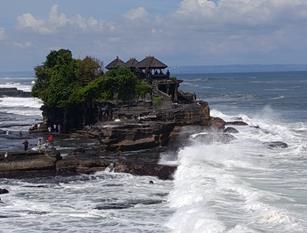
Pura Tanah Lot
'Land in the sea': a temple on a rock, Bali's guardian against the ocean
Beraban, Tabanan
Pura Tanah Lot is one of Bali's geographic icons, beautifully set on a rock, its name meaning 'land in the sea'. It provides the island's spiritual defence from the ocean side and was founded in the 16th century by the monk Dang Hyang Nirartha, famous for his spiritual journeys during the renaissance of Balinese Hinduism.
At high tide the temple cannot be reached dry-shod; at low tide you can approach the grotto at the foot of the rock, where priests bless visitors with water from a freshwater spring rising in the middle of the sea.
On the route
See the tour on balijczyk.plGround Zero – Kuta
Memorial to the 2002 bombing victims in the heart of the former backpacker mecca
Bali Bombing Memorial, Legian
Kuta, once a fishing village and the site of the largest slave market, became the front line of mass tourism from the 1970s onward, drawing hippies and backpackers.
Bali's greatest modern tragedy unfolded here in October 2002, when terrorists blew up two nightclubs in the entertainment district, killing 202 people from 21 countries. A stone memorial bearing the victims' names stands where Paddy's Pub used to be.
On the route
See the tour on balijczyk.pl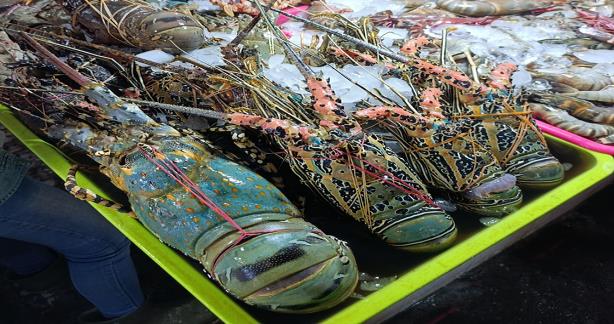
Targ rybny w Kedonganan
A wet market with the morning catch, right under the airport's runway
Pasar Ikan Kedonganan, zatoka Jimbaran
Kedonganan lies below Ngurah Rai airport on Jimbaran Bay and is famous for its wet fish market. Catches of every kind of fresh fish and seafood are brought here before landing on the tables of nearby restaurants for lunch and dinner.
Best trick: buy your fish at the market and carry it to a neighbouring warung, where they grill it over coconut husks for a few thousand rupiah.
On the route
See the tour on balijczyk.pl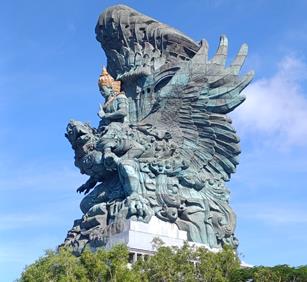
Park GWK Garuda Wisnu Kencana
A 122-metre statue of Vishnu riding Garuda, the tallest on the island
GWK Cultural Park, Ungasan
On the limestone plateau of the Bukit Peninsula, barren and rising from gentle hills into steep cliffs, lies the Garuda Wisnu Kencana cultural park with its monstrous 122-metre monument.
The statue pairs two key mythological figures: the god Vishnu, member of the holy Hindu trinity, and Garuda, his mount and also the emblem of the Republic of Indonesia. Completed in 2018 after 28 years of construction, it is one of the world's tallest statues.
On the route
See the tour on balijczyk.pl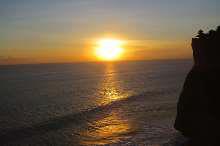
Klify Karang Boma
Bali's finest sunsets from the edge of a limestone precipice
Karang Boma Cliff, Pecatu
A short stop at the Karang Boma cliffs, where from the highest bluffs you can watch, breathless, the loveliest sunsets on Bali and the endless half-circle of the ocean.
On a clear day the outlines of the volcanoes of Java appear on the horizon. There are no railings; the place is raw and wild, which is exactly why it is so photogenic.
On the route
See the tour on balijczyk.pl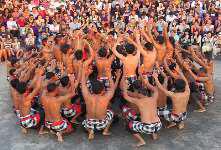
Pura Luhur Uluwatu i taniec Kecak
A pagoda on the brink of a 70-metre drop and a hypnotic fire dance at sunset
Pura Luhur Ulu Watu, Pecatu
Uluwatu, Balinese for 'stone at the land's end', is Bali's southernmost headland, the equivalent of a pole. Pura Luhur Ulu Watu is one of the most important sanctuaries of the Sad Kahyangan and a point of the Balinese compass that forms a spiritual shield around the island. A tiny three-tiered pagoda stands defiantly on the edge of a cliff plunging 70 metres to the ocean.
In this dramatic 'end of the world' setting the Kecak, Bali's most famous dance, is performed every evening. The characters and plot come from the Ramayana epic. Dozens of bare-chested dancers, as if in a trance, move in brilliantly synchronised choreography with no music at all, only the rhythmic chant of 'cak cak cak'.
On the route
See the tour on balijczyk.plPort w Sanur
Departure point for fast boats to Nusa Penida, Lembongan and the Gilis
Pelabuhan Sanur
Fast passenger boats leave Sanur's new harbour for Nusa Penida; the crossing to the main jetty takes about 45 minutes. Boats to Nusa Lembongan and the Gili islands go from here too.
A calm, 'old-school' resort district of Bali: a wide beach, a shallow lagoon, sunrises over Nusa Penida and the most family-friendly atmosphere in the south.
On the route
See the tour on balijczyk.pl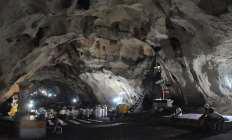
Pura Goa Giri Putri
A temple inside a vast cave you enter on all fours through a crack
Pidada, Suana, Nusa Penida
An extraordinary temple set in a cave used for meditation and spiritual practice since Neolithic times. You enter the huge cavern, decorated with stalactites and stalagmites, by crawling through a very short tunnel.
The interior can hold up to 5,000 worshippers during ceremonies. Deep inside stand Hindu altars and a Buddhist shrine to the goddess Kwan Im, a rare example of religions coexisting under one vault.
On the route
See the tour on balijczyk.pl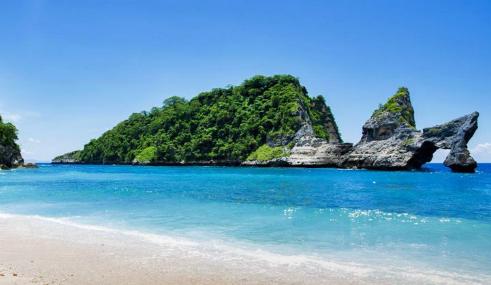
Plaża Atuh
A secluded crescent bay facing a fairytale-shaped rocky islet
Atuh Beach, Pejukutan
Probably the best of Nusa Penida's secluded beaches. A crescent of sand nestled in a charming cove faces a rocky islet of astonishing shape, like an arch and a sail.
Steep steps carved into the cliff lead down to the beach; at the bottom a few warungs offer sunbeds, coconuts and a grill, so you can linger.
On the route
See the tour on balijczyk.pl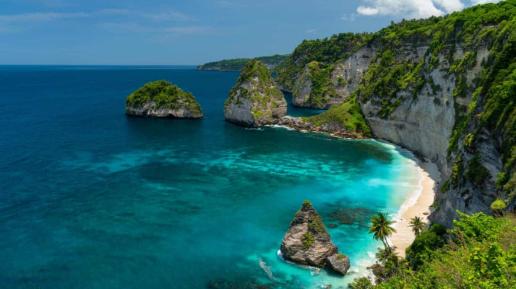
Diamond Beach
A turquoise bay with limestone 'diamonds' and a staircase cut into the rock
Pantai Diamond, Pejukutan
On the far side of the hill from Atuh hides iconic Diamond Beach, boasting dazzling turquoise water, majestic cliffs and diamond-shaped limestone rocks: views straight off a postcard.
Once unreachable from land, it is now accessible by a zigzag staircase carved into the rock, where you stop again and again to capture the moment. From the viewing platform at the top you see the whole bay at once.
On the route
See the tour on balijczyk.pl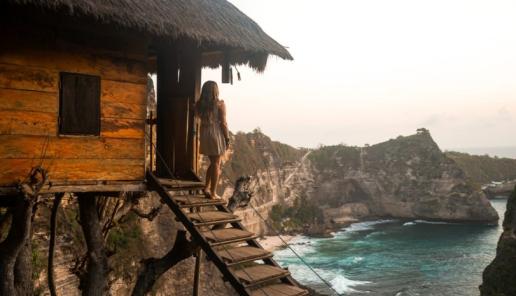
Domek na drzewie Molenteng
A fairytale hut over the abyss and the panorama of a thousand islands
Rumah Pohon Molenteng
An Instagram 'invention': the famous treehouse offering another dose of panoramic thrills. It is popular with tourists who pose on its steps and porch within a timed slot.
Nature lovers can walk out to the neighbouring Kepulauan Seribu viewing platform for the 'thousand islands' panorama: raw cliffs, rocky islets scattered across the sea and emerald coves. A place to stop time, far from the crowds.
On the route
See the tour on balijczyk.pl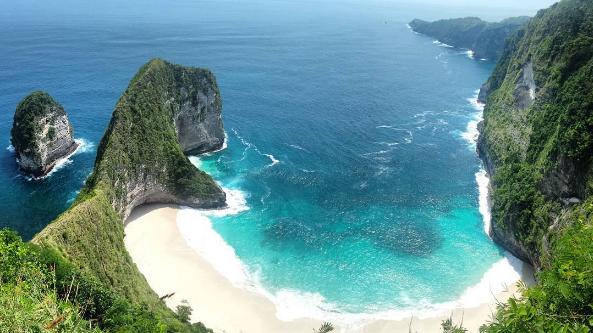
Kelingking – klif T-Rex
Indonesia's most iconic view: a dinosaur-shaped cliff above a hidden beach
Kelingking Beach, Bunga Mekar
The Kelingking cliffs are the headline act of any Nusa Penida trip, with breathtaking, dramatic scenery. The most striking rock formation resembles the body of a T-Rex, a unique backdrop for photos.
Looking down the precipice you see a hidden beach with crystal water and a strip of immaculate white sand, pounded by a churning sea driven by treacherous currents. A steep, hair-raising path runs from the 'dinosaur's saddle' all the way down to the beach for adventure seekers.
On the route
See the tour on balijczyk.pl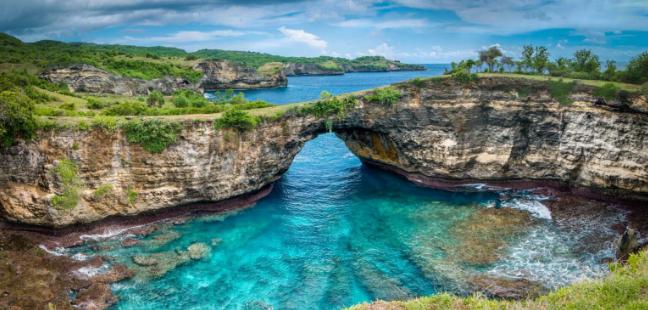
Broken Beach
The 'broken sea': a natural rock arch over an azure basin
Pasir Uwug, Bunga Mekar
Pasir Uwug, or Broken Beach, is a unique geological phenomenon: a collapsed cliff wall left a bridge-like rock arch through which ocean water flows into a fabulous circular basin.
A path circles the rim, so you can view the bay from every side. There is no way down to the water; this is a place to admire. With a bit of luck manta rays glide inside the basin.
On the route
See the tour on balijczyk.pl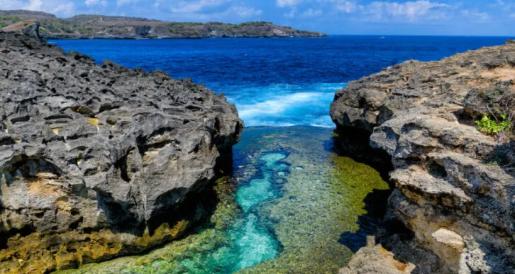
Angel's Billabong
A natural rock pool on the boundary of ocean and land
Bunga Mekar, Nusa Penida
A stunning 'pool' wedged between the rocks that creates the optical illusion of flowing straight into the ocean. Emerald hues and crystal water capture the fantasy of this secret hollow.
At high tide angry waves burst into the pool and spray in every direction; swimming then is deadly. At low tide with a calm sea the pool is as smooth as a mirror. From here the route usually returns to the jetty and the boat back to Bali.
On the route
See the tour on balijczyk.plPlaża Kuta
The long sandy beach where Bali learns to surf
Pantai Kuta
Kilometres of gentle sand and long, forgiving waves, which is why most beginner surf lessons happen here (from about 20 EUR with board). Loud, crowded and very touristy, but the sunsets are genuinely good.
Seminyak
Beach clubs, boutiques and the south's best restaurants
Kuta's elegant neighbour: beach clubs (Potato Head, Ku De Ta), designer shops, spas and cuisines from around the world. A good base for those who want everything within reach.
Canggu – Batu Bolong
Capital of digital nomads, surfers and avocado cafés
A former rice village that is now the island's hottest address: coworking spaces, cafés, the Batu Bolong and Echo Beach surf breaks and legendary traffic jams on single-lane streets. A large part of Bali's Polish community lives here.
Zatoka Jimbaran
Grilled seafood at tables planted in the sand
Teluk Jimbaran
The bay below the airport, where dozens of restaurants set tables on the sand. The classic: fresh seafood from Kedonganan market grilled over coconut husks, with landing planes and the sunset as your backdrop.
Nusa Dua
An enclave of five-star hotels with calm, sheltered sea
A planned resort of chain hotels, wide avenues and a reef-protected beach with the calmest water in the south, ideal for families. Very safe, very comfortable, not much 'real Bali'.
Tanjung Benoa – sporty wodne
Jet skis, parasailing, banana boats and a walk on the seabed
The peninsula with Bali's calmest lagoon, where all the water sports gather: jet skis (~25 EUR), parasailing (~30 EUR), banana boat (~15 EUR pp) and the sea walker, a stroll on the seabed in an air-fed helmet (~50 EUR), no dive certificate needed.
Puja Mandala
Five religions on one hill, a symbol of Indonesian tolerance
A 1997 complex where a mosque, a Catholic church, a Protestant church, a Buddhist vihara and a Hindu pura stand side by side. A living example of the state philosophy of Pancasila: unity in diversity.
Plaża Melasti
A road carved through white cliffs leads to the Bukit's cleanest beach
Pantai Melasti, Ungasan
A switchback cut into the limestone wall drops to a wide white beach with calm turquoise water at low tide. Site of the Melasti ceremony before Nyepi, with beach clubs on the cliff.
Plaża Pandawa
Statues of the five Pandawa brothers guard the road to the beach
Pantai Pandawa, Kutuh
You drive in between giant limestone walls with carved statues of the Mahabharata heroes. Below is a long, wide beach with sunbeds, kayaks and calm water behind the reef, a favourite of local families.
Padang Padang
A small beach through a crack in the rock, famous from 'Eat Pray Love'
Pantai Labuan Sait
You reach the beach through a narrow crevice in the cliff. A small, charming patch of sand with turquoise water and a famous wave that hosts surf competitions. Gets very crowded; the earlier the better.
Bingin
Cliff stairs, warungs hanging over the waves and surfer ease
A beach beneath the cliff, reached by hundreds of steps between huts and warungs. A great wave for advanced surfers, rock pools to swim in at low tide and grilled fish on the sand in the evening.
Balangan
A long wild beach and a cliff overlooking the whole bay
A kilometre of golden sand with a long surfer wave and simple warungs. The cliff on the left offers one of the best views in the south, especially at sunset.
Suluban – Blue Point
Caves, passages and the legendary Uluwatu wave
Pantai Suluban, Uluwatu
The beach beneath the Uluwatu cliff, entered through tunnels in the rock. At low tide caves and pools appear; on the horizon pros surf one of the world's most famous waves. The cliff bars (Single Fin) are the cult spot for a Sunday sunset.
Paralotnie Timbis
A tandem flight over South Bali's cliffs
Timbis Paragliding, Nusa Dua
Ocean wind hits the cliffs and lifts paragliders into long flights along the coast. A tandem flight with an instructor lasts 15–30 minutes, over Timbis or, on the other side of the peninsula, over Nyang Nyang.
Lotnisko Ngurah Rai (DPS)
The gateway to Bali, with a runway that juts into the sea
Bandara I Gusti Ngurah Rai
The international airport on the narrow isthmus between Kuta and Jimbaran. The airport transfer is the first moment you can lose money, or save it with a trusted driver.
Sanur
A calm lagoon, a promenade and sunrises over Nusa Penida
Bali's oldest resort, favoured by families and those who dislike noise. A five-kilometre beach promenade, shallow water behind the reef and the harbour for boats to the islands.
Denpasar
The island's capital: markets, a museum and a real Balinese city
Chaotic, hot, authentic. Worth a visit for Pasar Badung (Bali's biggest market), the Bali Museum on Puputan square and street food in the evening. Almost no tourists.
Ubud Monkey Forest
A sacred forest in the middle of Ubud with 1,200 macaques and three temples
Mandala Suci Wenara Wana, Padangtegal
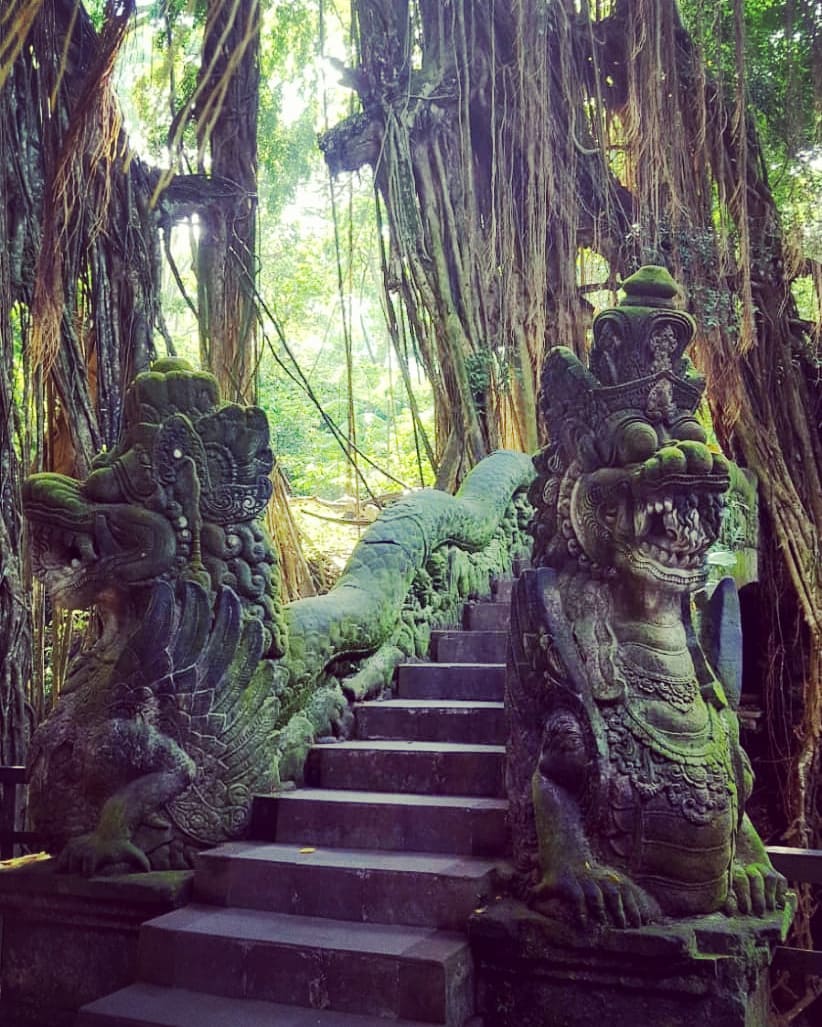
A reserve of mossy statues, a bridge over a gorge and three 14th-century temples, home to over a thousand long-tailed macaques. Beautiful but crowded: Ubud's most visited spot.
Ubud Art Market
Sarongs, baskets and carvings opposite the royal palace
Pasar Seni Ubud
The souvenir market in the heart of Ubud, from ata-grass baskets to paintings and oils. Pricier than Sukawati but with a huge choice. In the morning a locals' food market runs on the lower level.
Goa Gajah – Jaskinia Słonia
Enter the cave through a 9th-century demon's mouth
Bedulu
A 9th-century sanctuary: a meditation cave entered through a mouth carved into the rock, bathing pools with nymph statues discovered only in 1954, and Buddhist relics in the ravine below, a trace of the time when both religions lived here side by side.
Wodospad Tegenungan
The island's most visited waterfall, closest to Ubud
Air Terjun Tegenungan, Kemenuh
A wide, powerful cascade 15 minutes from Ubud, hence the crowds. Swimming in the pool below is allowed when the flow is moderate. Walk up to the lip of the falls for the warungs with a view.
Wodospad Tibumana
A single curtain of water in a green amphitheatre, safe for swimming
Air Terjun Tibumana, Bangli
One of the prettiest waterfalls for a swim: a short easy descent, a round pool and a tall narrow curtain of water among the ferns. Rarely crowded.
Wodospad Kanto Lampo
Water fanning down a stepped rock, a photographers' favourite
Air Terjun Kanto Lampo, Beng
An unusual waterfall: water spreads in a wide fan over rock steps you can stand on for a photo. Shallow, safe, close to Ubud, and therefore popular with local photographers.
Rafting na rzece Ayung
Two hours in a jungle gorge with waterfalls and rock carvings
Sungai Ayung, Payangan
A class II–III rafting trip through the 10-km Ayung river gorge, Bali's most popular. Along the way waterfalls drop straight into the river and Ramayana reliefs are carved into the canyon wall. All levels, from age 7.
Park słoni w Taro
Rescued Sumatran elephants in the village of Taro
Mason Elephant Park, Taro
A sanctuary for Sumatran elephants rescued from deforested Sumatra. Feeding, bathing and walking with elephants in the forest, in the first park on Bali to drop circus-style shows.
Celuk – wioska złotników
Silver and gold for generations: make your own ring
A village where Balinese silversmiths have worked for centuries. Hundreds of workshops and galleries, and for the keen a few-hour class in which you make your own silver jewellery, from design to polishing.
Mas – wioska snycerzy
The capital of Balinese woodcarving
A village of carvers whose home workshops produce masks, statues and furniture from teak, ebony and sandalwood. You can watch them being made and order something shipped home.
Pura Puseh Batuan
A temple from 1022 and the village of a famous painting school
One of Bali's oldest village temples, richly carved and rarely visited. Batuan is also the cradle of the 'Batuan style' of painting: dense black-and-white scenes of village life, shown in galleries along the main road.
Wulkan Batur (1717 m)
Sunrise over the caldera, by jeep, because the trek can be dangerous
Gunung Batur
An active volcano in the middle of the caldera and the goal of Bali's most famous sunrise. Note: the summit trek is controlled by local groups that have acted aggressively towards tourists without 'their' guide, which is why we do not organise it. The safe alternative: a 4x4 jeep trip to a sunrise viewpoint with a stop at the hot springs.
Gorące źródła Toya Bungkah
Pools of volcanic water on the shore of Lake Batur
Toya Devasya, Batur
Natural warm springs (about 38°C) channelled into pools right on the lake, facing Mount Abang. Perfect after a Batur sunrise, when a chilled body begs for warmth.
Wioska Penglipuran
Indonesia's cleanest village: one street, matching gates, a bamboo forest
Desa Adat Penglipuran, Bangli
A traditional village preserved in its pre-colonial layout: a cobbled main avenue, identical compound gates on both sides and a bamboo forest behind. No cars, no litter, and hosts inviting you in for coffee and loloh, a herbal drink.
Wodospad Tukad Cepung
A waterfall inside a cave that sunbeams fall into from above
Air Terjun Tukad Cepung, Tembuku
A short walk along the riverbed leads to a cascade dropping into a rock chamber open to the sky. In the late morning shafts of light pour in: the most famous photo in this part of Bali.
Brama Handara
A split gate in the mist, famous thanks to Instagram
Handara Golf Resort, Bedugul
The entrance to a golf course, whose candi bentar gate against misty mountains became one of Bali's most photographed spots. You take the picture from the road, in a queue.
Wanagiri Hidden Hills
Nests, swings and 'boats' above the twin lakes Buyan and Tamblingan
Along the road above the lakes run viewpoints with photo props: bamboo nests, swings, boat-shaped platforms. Kitsch, but the view of the two caldera lakes is genuinely impressive.
Wodospad Banyumala
Twin cascades over a crystal pool, the north's best swim
Banyumala Twin Waterfall, Wanagiri
Two broad, branching cascades slide down a green wall into a clear, cool pool. The steep path down takes 15 minutes. One of Bali's most pleasant swimming spots.
Munduk
A Dutch-era mountain village of cloves, coffee and waterfall trails
A cool village on a mountain ridge with views to the sea. Clove and coffee plantations, old colonial villas and a loop of four waterfalls (Munduk, Melanting, Labuhan Kebo, Golden Valley) within walking distance.
Wodospad Sekumpul
Bali's most beautiful waterfall: seven streams falling 80 metres
Air Terjun Sekumpul, Sawan
A group of seven waterfalls in a deep green valley in the north, considered the finest on the island. The descent through the village, plantations and river takes 45 minutes each way and requires fitness. The reward: a wall of water in scenery straight out of Jurassic Park.
Wodospad Gitgit
The most accessible of the great northern waterfalls
Air Terjun Gitgit, Sukasada
A forty-metre cascade beside the main Bedugul–Singaraja road, reached by a short paved path between stalls. Not as wild as Sekumpul, but effortless.
Lovina
A black beach, a calm sea and dolphins at sunrise
A string of quiet villages along the volcanic black beach of the north coast. The main event: heading out by boat at 6 am to meet pods of dolphins. No waves, no crowds, at the pace of 'old Bali'.
Wodospad Leke Leke
A slender ribbon of water in a rock crevice on the way to Bedugul
Air Terjun Leke Leke, Antapan
A short walk through bamboo forest and over footbridges leads to a tall narrow stream in a limestone crevice. A great quick stop between Ubud and Lake Bratan.
Pura Besakih – Świątynia Matka
Bali's largest and holiest temple complex on the slope of Mount Agung
Pura Agung Besakih
More than 20 temples on six terraces at 1,000 m on the slope of the sacred volcano. The main one, Pura Penataran Agung, has gates and stairways leading up towards Agung. The 1963 eruption missed the complex by metres, which the Balinese took as a sign from the gods.
Wulkan Agung (3031 m)
Bali's highest peak and spiritual axis, the abode of the gods
Gunung Agung
The sacred mountain by which the Balinese orient space: 'kaja' is the direction towards Agung. The last eruption in 2017 closed the airport for several days. The summit climb is a 6–7 hour night ascent, offered widely, but we do not organise it for safety reasons.
Dolina Sidemen
Rice terraces at the foot of Agung: Ubud thirty years ago
A green valley of rice terraces, songket weavers and views of Agung, without crowds. A favourite base for those who want to sleep in the silence of the paddies. Besakih, Telaga Waja and the east coast are close by.
Kertha Gosa – Klungkung
The old kingdom's hall of justice with a ceiling full of infernal punishments
Taman Gili, Semarapura
An 18th-century pavilion of justice in the former capital of Bali's most powerful kingdom. The Kamasan-style ceiling shows punishments awaiting sinners in the afterlife, images meant to prompt confessions from the accused. Next to it the Bale Kambang floats in a lotus pond.
Padang Bai – Blue Lagoon
The port for Lombok and Bali's best shore snorkelling
A small fishing port from which ferries leave for Lombok and the Gilis. Behind the hill hides Blue Lagoon, a cove with reef, turtles and shoals of fish right by the shore. Diving at Padang Bai means reefs and macro life in calm water.
Rafting Telaga Waja
Longer, faster and wilder than the Ayung, with Agung in view
Sungai Telaga Waja, Muncan
Sixteen kilometres of class III–IV river at the foot of Agung: more rapids, clear water and a four-metre dam drop for the finale. For those who find the Ayung too tame.
Amed
Fishing villages, black beaches and coral gardens within reach
A string of villages in the far east where reefs begin a few metres from shore. Snorkelling at the Japanese wreck, diving in the coral gardens of Jemeluk, jukung boats at dawn and Agung on the horizon. A base for those escaping the south.
Wrak USS Liberty – Tulamben
Asia's most famous wreck, 30 metres from the beach at 5–30 m depth
An American freighter torpedoed in 1942 and pushed into the sea by the 1963 Agung eruption. Today a 120-metre wreck overgrown with coral, full of shoals, barracuda and turtles, accessible straight from the beach for divers and snorkellers alike. Most PADI courses on Bali happen here.
Wyspa Menjangan
Bali's clearest water: coral walls in the national park
Pulau Menjangan, Taman Nasional Bali Barat
An uninhabited islet in West Bali National Park, ringed by vertical reef walls with visibility up to 40 metres. The island's best snorkelling and wall diving; on land the deer (menjangan) that gave it its name. Far from everything, and therefore empty.
Pemuteran
A quiet bay with a restored Biorock reef and views of Java's volcanoes
A calm village on a bay where the reef has been restored since 2000 using the Biorock method: underwater structures growing coral right by the beach. The base for Menjangan and the national park.
Park Narodowy Bali Barat
Savannah, mangroves and the last Bali starlings
Taman Nasional Bali Barat
Bali's only national park: 190 km² of monsoon forest, savannah and mangroves at the island's western tip. Home of the Bali starling, a snow-white bird of which only a few hundred remain in the wild. Guided treks, birdwatching, silence.
Crystal Bay
The bay with Penida's best snorkelling and a chance of a mola mola
Pantai Crystal Bay, Sakti
A sandy bay between two hills with an islet in the middle and reef by the shore. Snorkelling from the beach, and from July to October diving with the ocean sunfish (mola mola), one of the strangest fish in the sea. A popular sunset spot.
Manta Point
A manta cleaning station beneath the south coast cliffs
Batu Lumbung, Nusa Penida
Where manta rays with a four-metre wingspan come to have small fish clean them of parasites. Snorkelling and diving from a boat; mantas are seen almost daily, all year round. One of Bali's most moving encounters with nature.
Punkt widokowy Tysiąca Wysp
Rocky islets scattered across a turquoise sea
Kepulauan Seribu / Raja Lima, Pejukutan
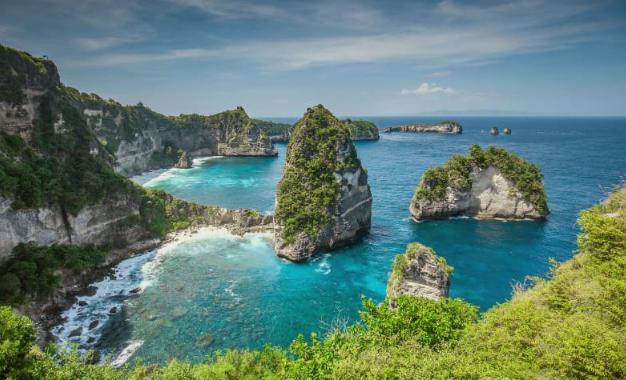
A platform on the cliff edge next to the Molenteng treehouse, overlooking an archipelago of rocky islets strewn across the sea, 'Raja Lima', the five kings. One of the most dramatic views on all of Penida.
Nusa Lembongan – Devil's Tear
Penida's little sister: seaweed farms, Dream Beach and the spray of Devil's Tear
An island 30 minutes by boat from Sanur that you circle by scooter in an hour. Mangroves, seaweed farms, Dream Beach and Devil's Tear, a cliff where waves explode into fountains many metres high. A yellow bridge leads to neighbouring Nusa Ceningan.
Port Toya Pakeh
Nusa Penida's main jetty, where the island tour begins
Pelabuhan Toya Pakeh, Nusa Penida
The harbour village on the north-west shore where boats from Sanur dock. Drivers, scooter rentals and the first warungs. The limited road network and its condition mean the safest way around the island is a car with a local driver.
Gili Trawangan
The biggest of the three Gilis: no cars, snorkelling off the beach and nightlife
Gili Trawangan, Lombok Utara
Three coral islets off the coast of Lombok, one to two hours by fast boat from Padang Bai or Sanur. Trawangan has no cars or scooters, only bicycles and horse carts (cidomo). The east shore is the main strip with bars, dive schools and a night market; the west is quiet, with sunsets over Agung across the strait. You can walk around the island in two hours.
Huśtawki na zachodnim brzegu Gili T
Swings in the sea and the sun setting behind Agung
Ombak Sunset swing, Gili Trawangan
Trawangan's west shore is a kilometre of beach with bars and wooden swings planted in the shallows, the most photographed spot on the Gilis. At low tide the swings stand on dry sand, at high tide waist-deep in water. Bali and the cone of Agung sit on the horizon, sometimes with Batur beside it.
Nest – podwodne rzeźby Gili Meno
A ring of 48 figures on the seabed, 50 metres off the beach
Nest by Jason deCaires Taylor, Gili Meno
An installation by British sculptor Jason deCaires Taylor from 2017: 48 human figures arranged in a circle at four metres' depth off Meno's west shore. The concrete bodies are slowly being overgrown with coral and have become an artificial reef full of fish. Visible from the surface with a mask; in good visibility you don't need to dive.
Turtle Point – Gili Meno
The quietest Gili and green turtles grazing just off the beach
Turtle Point, wschodni brzeg Gili Meno
Meno is the middle, smallest and quietest island: a few hundred residents, a salt lake in the centre and beaches that are sometimes empty. Off the north-east shore green and hawksbill turtles graze on seagrass a dozen metres from the sand, the most reliable place on the Gilis to see them. A path circles the island; the walk takes an hour and a half.
Gili Air
The happy medium between party Trawangan and empty Meno
Gili Air, Lombok Utara
The closest of the three to Lombok, with Rinjani in view to the east. There is a village with real local life, cafés, yoga and dive schools, and beach bars without discos in the evening. Snorkelling off the east beach, sunsets on the west side, all within a 20-minute walk.
Port Bangsal (Lombok)
Public boats to the Gilis for pennies, the gateway from Lombok
Pelabuhan Bangsal, Pemenang
A small port on Lombok's north-west coast, 15 minutes by boat from Gili Air and 30 from Trawangan. Cheap public boats leave from here (once about 20 passengers have gathered) alongside fast charter boats. A good link if you combine the Gilis with Rinjani or Lombok airport instead of returning to Bali.